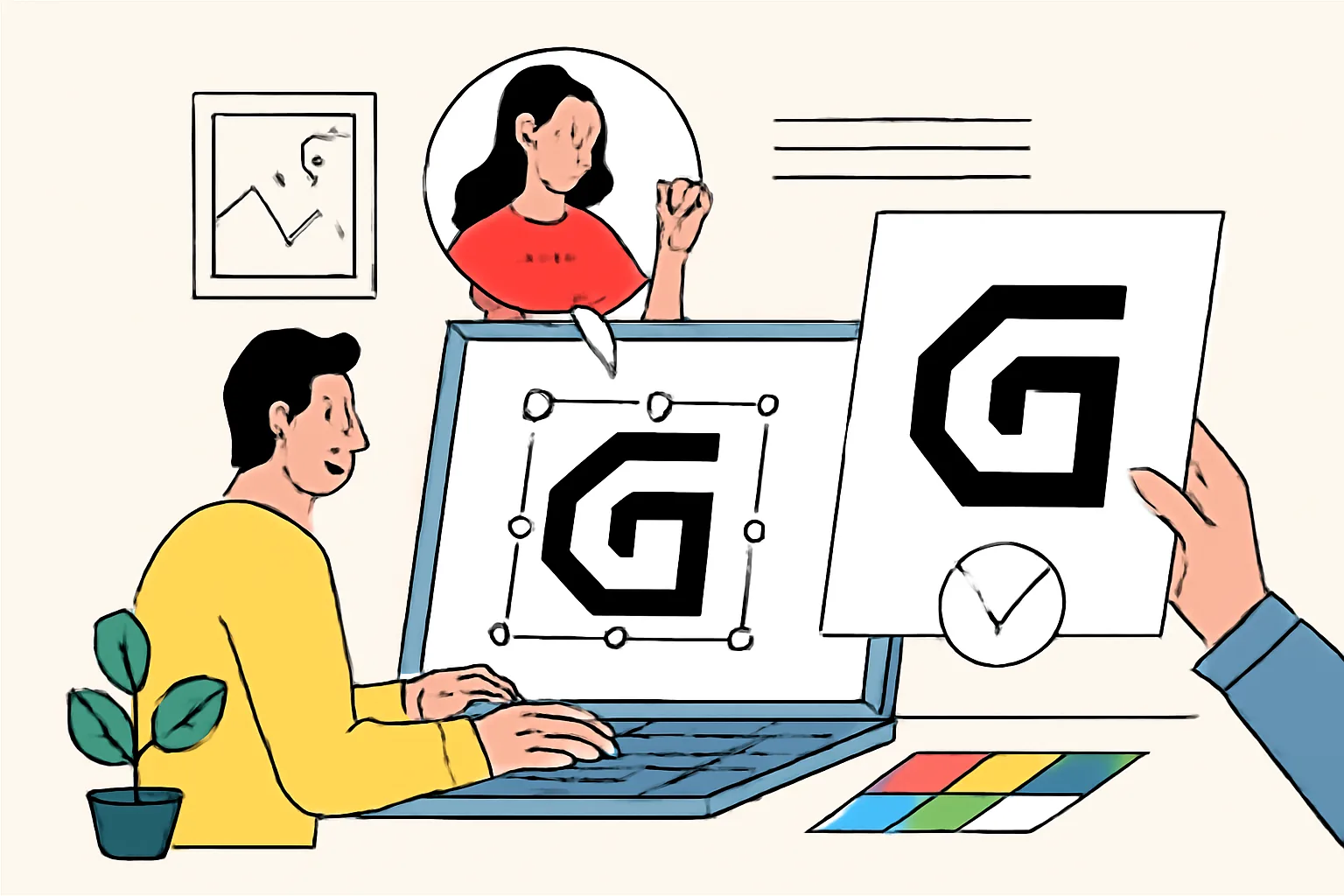
How to Hire a Freelancer for a Logo Design
A logo is often the first serious impression a brand makes. It appears on a website, a business card, a packaging label, a presentation deck, and sometimes on a tiny social media avatar where every curve matters. That is why hiring for logo design is not just about finding “someone who can draw.” It is about finding a freelancer who can translate a business idea into a mark that feels clear, usable, and memorable.
The good news is that a strong result does not require luck. It usually comes from a disciplined hiring process: define the goal, write a solid brief, compare portfolios carefully, and keep the project organized from the first message to final delivery. If you are new to the process, it can help to read how to hire a freelancer safely alongside this guide. The basics overlap, but logo work has a few extra traps, especially around revisions, usage rights, and file formats.
Define Your Logo Goals and Project Scope
Before you contact a designer, decide what the logo must do. A logo for a local bakery has different needs from one for a SaaS platform, a law firm, or a craft clothing label. The logo should communicate something specific: trust, speed, tradition, premium quality, playfulness, technical competence, or perhaps a mix of these. If you cannot describe that in a sentence or two, the designer will have to guess.
Also think about where the logo will be used. A mark that looks fine on a desktop website may disappear on a mobile app icon. A detailed emblem may look elegant on signage but collapse when printed on a pen. List the main places where the logo will appear:
- Website header and favicon
- Social media profiles and cover images
- Business cards, brochures, and presentations
- Packaging, labels, uniforms, or merchandise
- App icon, dashboard, or product interface
This is also the time to define brand style. Do you want something minimalist, corporate, handcrafted, vintage, geometric, playful, luxury, or bold? A designer can work with nearly any direction, but not with contradictions. Saying “modern but classic, premium but casual, serious but friendly” is a common human reflex; for a brief, it is not enough. Pick a primary direction and one or two supporting qualities.
Finally, set expectations for timeline and deliverables. Some projects need only a primary logo and a basic monochrome version. Others require a full identity set with variations for light and dark backgrounds, icon versions, and source files. Be explicit about what “done” means.
Understand Logo Designer Rates
Logo pricing varies for reasons that are easy to overlook when you are comparing one quote to another. Experience is the obvious factor, but it is not the only one. Two designers may both offer a logo concept, yet one may include research, mood boards, multiple options, and editable vector files, while the other provides a single sketch and one round of tweaks. Those are not equivalent offers.
Other pricing factors include:
- Number of concepts included
- Number of revision rounds
- Speed of delivery or rush turnaround
- Ownership and usage rights
- Whether source files are included
- Extra brand assets such as a style guide or social media kit
When researching logo designer rates, compare packages carefully. A lower price can be a smart choice for a very simple need, but cheap is not automatically efficient if the result needs rework. On the other hand, a higher quote may be justified if the designer runs a thoughtful process, communicates well, and delivers polished source files that save you trouble later.
One practical tip: do not ask only “How much for a logo?” Ask what the price includes. A freelancer who explains the process clearly is often worth more than a cheaper option that leaves half the job undefined.
Write a Strong Freelance Logo Design Brief
A good freelance logo design brief is not a long essay. It is a clear packet of useful context. The aim is to help the designer understand the brand quickly, not to overwhelm them with marketing jargon. Think of it as the working document that keeps everyone honest.
At minimum, include these points:
- Brand name and short description
- What the business does
- Target audience
- Main competitors and how you want to differ
- Brand personality and tone
- Style references, if any
- Preferred or avoided colors
- File formats needed at the end
- Approval process and decision-maker
The best briefs also include a few concrete examples. If you like a certain logo because it feels clean and timeless, say so. If you dislike another one because it is too ornate or too trendy, say that too. Designers use references as a compass, not as a template to copy. And yes, there is a difference.
Do not forget practical requirements. If the logo must be readable on a dark background, specify that. If you need an icon that can stand alone without the wordmark, mention it. If the final delivery must include vector files for future printing and editing, say so early. Surprises at the end are expensive.
For a broader view of project posting, you may also find it useful to read how to effectively post a project. A well-written project description does a lot of the heavy lifting before the first proposal arrives.
Find and Shortlist Freelance Logo Designers
There are several places to look for logo designers: freelancer directories, portfolio platforms, recommendation lists, and niche marketplaces. If you are already browsing talent, the freelancers directory can be a useful starting point for comparing profiles and styles in one place.
Once you find potential candidates, examine the portfolio with a designer’s eye rather than a casual browser’s eye. Ask yourself:
- Does the work show the kind of style you need?
- Are the marks clean at different sizes?
- Do the logos feel appropriate for real businesses, not just personal experiments?
- Is there variety, or does every project look the same?
- Does the designer show process work, not just final images?
Industry experience can help, but it is not always essential. A designer who has done several hospitality logos may still be a poor fit for a fintech brand if the style is wrong. Style match matters more than category labels, though experience with your sector can reduce the learning curve.
Communication matters too. A great portfolio does not compensate for vague replies, missed messages, or a habit of answering questions with new questions. Read client feedback carefully, especially notes about reliability and revisions. If you want to understand how reviews shape reputation over time, the article on freelancer reviews and reputation offers a useful perspective.
Evaluate Proposals, Samples, and Pricing
When the proposals arrive, compare them on more than price. A bid that looks affordable may omit key items, while a higher one may include research, concept development, and production-ready files. Read each proposal line by line and look for the actual scope.
Here is what to check:
| What to compare | Why it matters |
|---|---|
| Concept count | More concepts can help, but too many may dilute focus. |
| Revisions included | Clarifies how much back-and-forth is covered. |
| Source and vector files | Necessary for print, scaling, and future edits. |
| Ownership terms | Confirms who can use the final logo and how. |
| Timeline | Helps you judge whether delivery is realistic. |
Watch for red flags. Extremely vague proposals, copied portfolio images, and a refusal to discuss process are all warning signs. So is a bid that promises “unlimited revisions” without any structure. Unlimited can sound generous, but in practice it may mean the project has no boundary and no finish line.
Deciding whether a higher price is justified depends on process and quality. If a designer explains how they research your market, test visual directions, and prepare usable files, the premium may be sensible. If the price is higher only because the seller says they are “top-tier,” keep looking.
Interview Candidates and Ask the Right Questions
Before you hire, have a short interview or message exchange. The goal is not to impress each other; it is to make the working method visible. A good designer should be able to describe how they think and how they handle change.
Useful questions include:
- What is your usual logo design process from brief to final delivery?
- How many initial concepts do you provide?
- How do you handle revisions, and how many are included?
- What is your realistic timeline for this project?
- Will I receive vector source files and which formats?
- Who owns the final logo and usage rights after payment?
- How do you prefer to receive feedback to keep the work moving?
- Have you worked on similar brands or industries before?
Pay attention to how the designer answers, not just what they say. Clear answers suggest a clear process. Defensive answers can indicate friction later. A professional freelancer should not be offended by questions about ownership or source files; those are ordinary business questions, not a courtroom drama.
This is also a good moment to ask how they handle feedback. Some designers want annotated comments in one document. Others prefer a live call after each round. The exact method is less important than the fact that it exists. Without a feedback system, even talented work can become messy.
Hire, Kick Off, and Manage the Logo Project
Once you have chosen a freelancer, confirm everything in writing: scope, price, timeline, milestones, revision count, deliverables, and ownership terms. If anything important remains unwritten, it can become ambiguous later. Ambiguity is where projects slow down.
A practical kickoff usually includes:
- The approved brief
- Brand assets already available, such as existing colors or typography
- Primary contact person for approvals
- Deadline for first concepts
- Dates for review and final handoff
During the project, give feedback efficiently. Instead of saying “I do not like it,” explain what is not working: too thin, too playful, too generic, too close to a competitor, not readable at small sizes, or not aligned with the brand tone. Specific feedback helps the designer revise with purpose rather than guesswork.
Try to separate personal taste from business goals. You may prefer blue, but if the audience associates your category with another palette, the designer may have a valid reason to push back. Good collaboration is not blind agreement; it is a constructive discussion guided by the brief.
Before final approval, review the logo in realistic settings. Look at it on a white background, a dark background, and in small sizes. Ask for the promised formats and check that the files open correctly. If the project includes source files, make sure they are delivered and labelled clearly. A tidy folder now will save time later when someone asks for a print version six months from today.
Finally, if you expect to work with freelancers regularly, it can help to organize your own process and maybe keep a shortlist for future jobs. A strong first experience often becomes a repeat relationship. That is one of the advantages of hiring carefully: you are not only buying a logo, you are building a reliable working pattern.
For a marketplace with many categories and specialists, you can also browse all tags on the freelance marketplace to discover related talent and compare service types beyond logo design. Sometimes the right designer is found not by searching harder, but by looking in a better way.
In the end, hiring a freelancer for logo design is less about chasing the cheapest offer and more about setting clear expectations. Define what the logo must accomplish, write a concise brief, review portfolios with care, and treat the project like a small creative partnership. Do that, and you give the designer a real chance to produce something that works in the wild, not just in a presentation slide.


Comments 0
No comments yet — be the first.