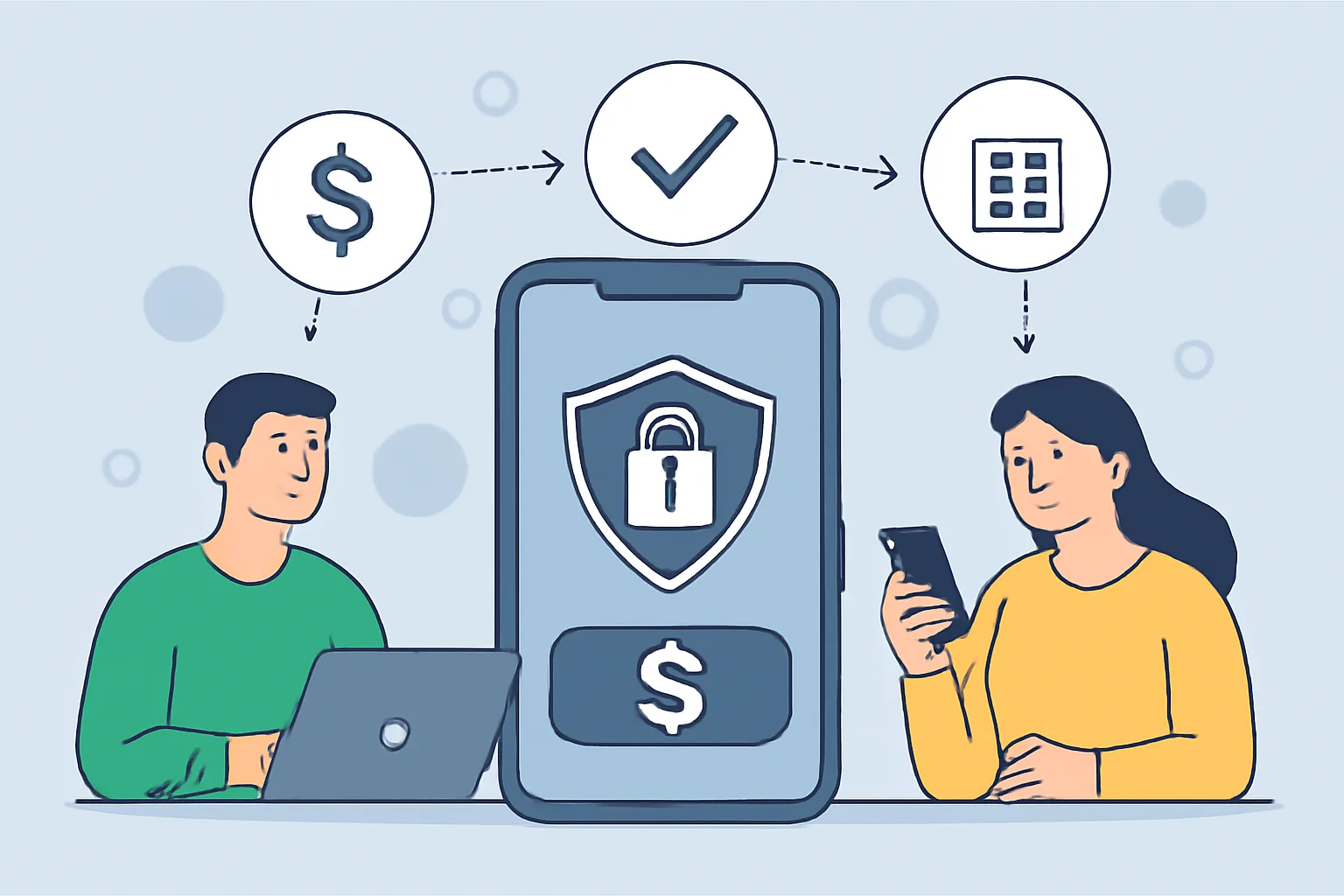
What a secure deal payment system is
A secure deal payment system is a simple escrow-style setup. The client places money with the marketplace before work starts, and the freelancer gets paid only after the agreed result is delivered. That basic triangle matters because it changes the order of risk. Instead of one side trusting a promise, both sides trust a process.
In practical terms, the marketplace holds the funds in a temporary state while the project runs. The payment does not sit in the freelancer’s pocket on day 1, and it does not stay in the client’s bank account once the contract is accepted. The money is parked in the middle, waiting for a named condition to be met. That condition is usually delivery, approval, or the end of a review window.
This is the sort of system people ask about when they wonder how does the secure deal payment system work on a freelance marketplace. The short answer is that it keeps the money visible but not freely spendable until the job reaches the agreed checkpoint. Simple idea. Fussy execution. Those two things can live together.
Many marketplaces present the process as a set of steps rather than one vague promise, and that is smart. A client wants to know where the money sits. A freelancer wants to know what proof is needed. A good secure deal flow answers both questions before the first file is uploaded.
Why marketplaces use secure payments
Trust is the first reason. A client who has been burned once will not enjoy paying strangers upfront, and a freelancer who has been ghosted after three rounds of revisions will not enjoy unpaid work either. The secure deal model lowers the emotional temperature. It gives both sides a rule instead of a guess.
Money risk is the second reason. Without an escrow-style arrangement, a freelancer may finish a logo, a draft, or a database cleanup and then spend days chasing payment. A client may send an advance and then wait for a half-finished job. One side has cash, the other has labor, and neither has much protection. A secure deal tries to stop that uneven exchange.
Clearer accountability is the third reason. If the project has a defined start, a stated deliverable, and a payment trigger, then arguments become narrower. A dispute can still happen. Of course it can. Yet a dispute over “what was agreed” is easier to handle when the agreement was written in the first place. That is why platforms keep pushing users to confirm scope before funding.
There is also a record-keeping benefit. Messages, files, timestamps, approval clicks, and deadline changes create a paper trail that can be reviewed later. That matters on a marketplace where a client may hire three people in one month and forget which revision was requested on which date. If you need a broader read on safer hiring habits, see how to hire a freelancer safely.
Step-by-step flow of a secure deal
Step 1 is the agreement. The client describes the task, the freelancer accepts it, and both sides confirm the scope. A decent agreement names the deliverable, the deadline, and any milestones. If the work is a website mockup, the agreement should not say only “design task.” That is too loose.
Step 2 is funding. The client adds the money to the secure deal, and the marketplace marks the project as financed. This is the point at which the job becomes real inside the system. No funds, no release later. That part is plain.
Step 3 is work in progress. The freelancer starts the job and may send drafts, screenshots, drafts again, or sample files depending on the project type. Small note: communication stays better when both sides keep it on the platform. A phone call can be fine, but the written record usually saves time later.
Step 4 is delivery. The freelancer submits the result, and the client checks it against the agreement. For a logo, that might mean file format, color variants, and source files. For copywriting, it might mean word count, tone, and a list of required keywords. For a spreadsheet cleanup, it might mean matching column names and zero broken formulas.
Step 5 is review. The client either approves the result, asks for changes, or raises a dispute. This is where the system earns its keep. A good review step gives space for fair corrections without forcing either side to abandon the project.
Step 6 is release or escalation. If the client approves, the money moves to the freelancer. If there is a problem, the marketplace follows its own complaint path. That path is slower than direct payment, and yes, slower is annoying. It is still better than silence.
What happens if the work is approved
Approval is the cleanest outcome. The client clicks confirm, or the platform’s review period ends without objection, and the funds are released to the freelancer. The exact timing depends on the marketplace rules, so the approval window matters. A 2-day window is not the same as a 7-day window.
After approval, the freelancer can withdraw the payment according to the platform’s payout method. Some marketplaces route it to a card, some to a wallet, and some to a linked account. The platform may still apply a processing delay. That delay is not a flaw by itself; it is part of the money flow.
Clients like approval because it creates a final checkpoint. Freelancers like approval because it ends the waiting period. A project without an approval step can drag on for one extra request, then one more. A project with a clear end point often finishes cleaner. Not always. Often enough to matter.
One practical detail: approval should follow the deliverables, not the mood of the day. If the agreement says “three banner sizes and editable source files,” the client checks those items one by one. If the work matches the list, payment should move. That is the whole point of a secure deal.
What happens if there is a dispute
Disputes usually start with a complaint inside the marketplace. The client says the work is incomplete, and the freelancer says the work was delivered as agreed. The platform then asks for evidence. That evidence can be chat logs, uploaded files, screenshots, revisions, or a milestone list.
Communication comes first in many systems. A mediator, support agent, or internal review team may ask both sides to explain what happened in writing. A short, calm message is usually better than a long angry one. No one wins points for volume.
The marketplace mediation step tries to match the evidence to the agreement. If the client requested five pages and the freelancer sent three, the case is straightforward. If the scope changed three times in chat, the case is messier. That is why written records matter so much.
Some disputes end with partial payment, a revision request, or a refund to the client. Others end with the funds released to the freelancer because the deliverable met the terms. Either result can feel harsh to one side. Fairness in dispute handling is about process, not comfort.
If you are interested in how reputation affects these arguments, freelancer reviews are part of the story. A strong record does not replace evidence, but it can make a platform look twice before ignoring a pattern. Patterns matter.
Fees, holds, and refund rules
Most secure deal systems involve fees. The platform may charge the freelancer, the client, or both. That fee can be fixed or percentage-based. Users often ignore it until the payout arrives. Then they notice. A better habit is to read the fee page before accepting the job.
Temporary holds are another common condition. Funds may remain unavailable during the project, the review period, or the payout processing period. Three separate waiting stages are not unusual. They can be frustrating, but they are part of the protection model. Money held for 5 days feels different from money released in 5 minutes. That difference is the tradeoff.
Refund rules vary by marketplace. Some platforms refund only when the work was not delivered. Others allow partial refunds if the agreed result was incomplete. A few marketplaces keep administrative fees even when the main payment returns to the client. This is why terms should be read before funding, not after a dispute begins.
Here is the blunt version: if a platform says a fee is non-refundable, that fee is not coming back just because the project stalled. Users need to know that before they click accept. Small print has a memory. It does not forget.
Benefits and limitations for clients and freelancers
For clients, the biggest benefit is protection against paying for nothing. Funds stay in the secure deal until some measurable step is completed. That reduces the chance of paying and then hearing excuses for two weeks. Clients also get a stronger basis for complaint if the deliverable does not match the agreement.
For freelancers, the benefit is proof that the money exists before work begins. That matters on projects where the client is new, unknown, or likely to disappear after the draft stage. A funded secure deal gives the freelancer a more confident starting point. It does not remove all risk, but it lowers the worst one.
The main limitation is delay. Clients may wait for review windows, and freelancers may wait for approvals and withdrawals. Money is not instant just because the work is done. That delay can be especially annoying on small projects where the service itself took only 2 hours.
Another limitation is rigidity. A secure deal can be very fair and still feel stiff when the scope changes halfway through. A client who adds a new section, and a freelancer who accepts it casually, can create trouble later if the extra work is not added to the record. The system rewards clarity, not improvisation.
There is also the problem of misunderstanding. A client may think “final version” means one file, while the freelancer thinks it means one file plus source assets. That sounds minor until payment is blocked. If the marketplace is strict, the wording in the agreement matters more than either side’s memory.
Best practices for using secure deal payments
Start with milestones if the job is bigger than a single task. Three milestones are often easier to manage than one all-or-nothing handoff. A website build, for example, can be split into design, development, and final fixes. Each milestone should have its own delivery point and its own approval step.
Keep communication on the platform. A message thread with dates and file names is worth more than a vague memory of “we talked about it somewhere.” If the project later becomes a dispute, that thread can show who asked for what, and when. No drama needed. Just records.
Document deliverables in plain language. Say “PNG, SVG, and source file” instead of “all the files.” Say “homepage and contact page” instead of “basic site.” If the project is technical, add version numbers, page counts, or format limits. Those details prevent the familiar argument where both sides insist they understood the same sentence differently.
Read the marketplace terms carefully, especially the sections on fees, holds, and refunds. The rules of the 24freelance.pro site. freelance can shape what happens if a deadline slips or a file is rejected, so do not assume every marketplace works the same way. A platform may also have category-specific expectations, which is why all tags on the freelance marketplace can be useful before you choose a project type or service area.
If the job is design-heavy, a clear brief helps even more, which is why freelance for designers can be worth a look before you set a milestone. One clear milestone beats three fuzzy promises. And a written brief beats a memory every time.
Do one more thing: verify the deadline before funding. A 24-hour turnaround and a 10-day build do not belong in the same secure deal unless both sides said so. That is the kind of detail that keeps the payment system useful instead of merely decorative.
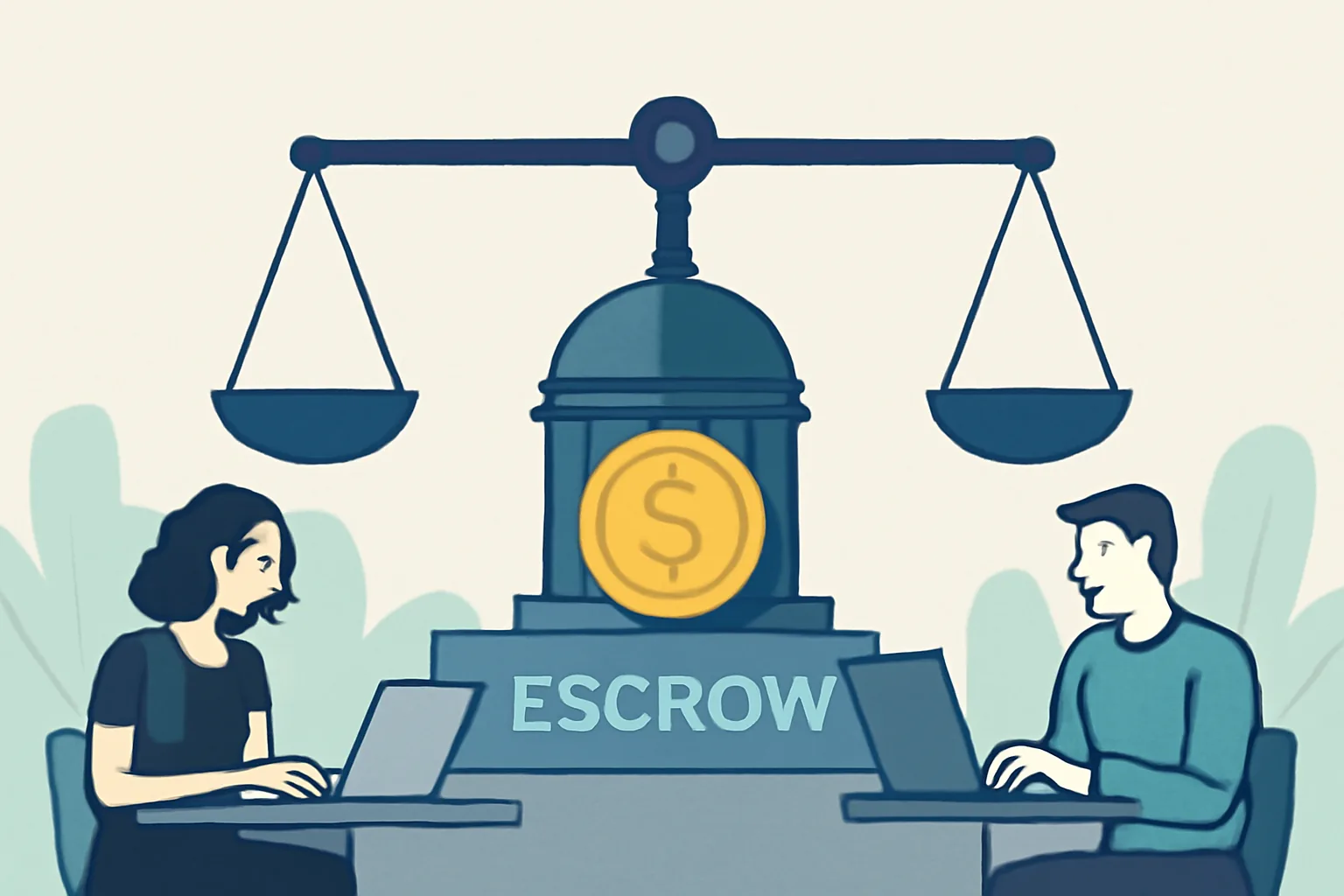
The freelance marketplace escrow system helps structure these transactions, and how escrow payments protect clients and freelancers is easy to see in the way money stays held until the agreed checkpoint is met.



Comments 0
No comments yet — be the first.