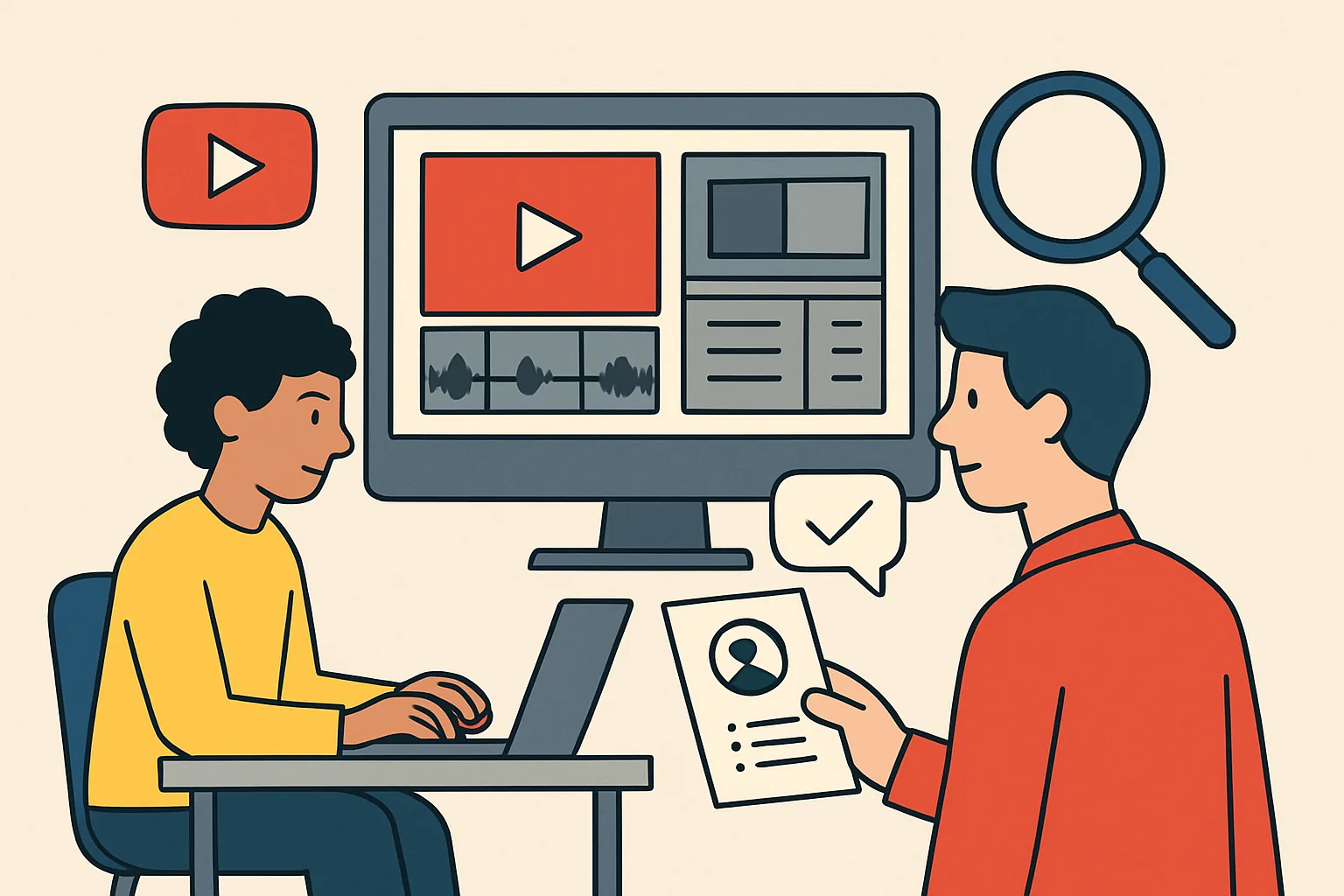
How to Hire a Video Editor for YouTube
Hiring a video editor for YouTube is one of those decisions that looks simple from the outside and becomes very specific once you actually start doing it, and if your channel is small, you may be editing everything yourself out of habit. If your channel is growing, you may be spending more time in an editing timeline than in front of a camera. At some point, that trade-off starts to hurt the channel.
A good editor does more than cut dead air. They shape pacing, help viewers stay longer, make your branding feel consistent, and turn raw footage into something people actually want to finish, and that matters whether you publish talking-head videos, tutorials, interviews, product reviews, vlogs, or Shorts. The right person can make your content feel sharper without making it feel overproduced.
And yes, there is a right time to outsource. If editing keeps you from scripting, filming, or publishing on schedule, it may already be time. If you are still experimenting with format, you may want to keep editing in-house a little longer. The point is not to hand over control blindly, and it is to hire with a clear idea of what you need and why.
1. Why Hiring the Right Editor Matters
YouTube is unforgiving about pacing. If a viewer clicks away in the first minute, the rest of the video does not matter much. A skilled editor can help prevent that by trimming intros, tightening explanations, and cutting to the point faster than a creator often can while speaking. That is not a creative insult; it is simply hard to be objective about your own footage.
The right editor also strengthens your channel identity, and maybe your videos need a fast-paced rhythm with captions and zoom cuts. Maybe they need a calmer documentary feel with restrained music and clean transitions. Either way, consistent editing helps viewers recognize your work before they even see the channel name.
There is also a practical side. Editing takes time, and time has a cost even when nobody invoices it, and when you outsource, you can focus on planning, research, shooting, community engagement, or sponsorship outreach. For many creators, that shift is the difference between occasional uploads and a reliable publishing schedule.
If you want a broader look at freelancer hiring practices, this guide on how to hire a freelancer safely is worth reading alongside your editor search.
2. Define Your YouTube Editing Needs
Before you start looking for a hire freelance video editor candidate, get specific about what you actually need. “I need editing help” is too vague to produce good results. Different channels need different levels of support, and different editors specialize in different kinds of work.
Start with your content format
Are you making talking-head videos, screen recordings, gaming videos, interviews, travel vlogs, educational explainers, or product demos? A creator who mainly edits cinematic travel sequences may not be the best fit for a dense tutorial with screen captures and callouts, and the more clearly you define your format, the easier it becomes to spot a matching portfolio.
Map the workload honestly
Think about how much footage you usually produce. Do you record one long session and need it cut into one polished video? Do you need multiple Shorts from each shoot? Do you need thumbnails, captions, simple motion graphics, or sound cleanup as well? These details matter because “video editing” can mean very different things from one channel to another.
Decide on turnaround and cadence
If you upload weekly, your editor needs a rhythm that supports that schedule. If your videos are urgent, you need someone who can handle deadlines without turning every request into a fire drill. Be realistic here. Fast turnaround is valuable, but if you need heavy edits with several revision rounds, that takes time, and it is better to admit the timeline upfront than to discover it after the first missed delivery.
Be clear about budget and scope
Budget is not just a number; it is a boundary. If you can only pay for basic cuts and light cleanup, do not describe the job as if you need a full post-production studio. On the other hand, if your channel depends on polished storytelling, a higher level of editing may save you time and improve viewer retention enough to justify the investment.
3. Where to Hire a Freelance Video Editor
There are several good places to look for an editor, and the best option depends on whether you want speed, specialization, or a broader choice of candidates.
Freelance platforms with portfolios and reviews, where you can compare candidates side by side.
Creative marketplaces where editors often showcase visual work and niche style.
Referrals from other creators, agencies, or production contacts.
Niche communities on YouTube, Discord, or industry forums where editors and creators already speak the same language.
If you want a directory-style starting point, browsing a freelancer catalog can save time. You can also explore the freelancers catalog to see how professionals present their services and specializations. That kind of browsing is useful even if you do not hire immediately, because it helps you understand how editors describe their strengths.
Another helpful source is tag-based browsing. When you are searching for a specific skill set, the popular tags on the freelance marketplace can point you toward relevant categories faster than a generic search.
Referrals are especially valuable if you know another creator with a channel similar to yours. A recommendation from someone who already works with an editor tells you more than a polished profile ever will. Still, do not skip evaluation just because someone is recommended, and a good fit for one channel is not automatically a good fit for yours.
4. How to Evaluate a Video Editing Freelancer
Once you have a shortlist, the real work begins. A nice portfolio is a good sign, but it is only the beginning. You need to see whether the editor can handle your style, your pace, and your communication habits.
Review the portfolio carefully
Look for actual YouTube samples, not just unrelated demo reels, and if possible, watch a full video rather than a highlight clip. Pay attention to how the editor handles pacing, transitions, cuts, sound balance, text overlays, and visual emphasis. Are the videos easy to follow? Do they keep momentum without feeling frantic?
Check niche experience
A generalist editor may be perfectly fine, but niche experience can be a major advantage. An editor who understands educational content may know how to keep explanations clean and visual. Someone who has edited gaming videos may already know how to handle quick reactions, meme inserts, and energetic pacing, and a creator who makes interviews may need an editor who can smooth out conversation without flattening personality.
Ask about software and workflow
You do not need to interrogate someone about every tool in their stack, but it helps to know what they use and how they organize files. Ask about project files, versioning, captioning, music sourcing, and whether they can work with your existing footage format. If you have a complicated workflow, this conversation is not optional.
Assess communication and reliability
Editing work often fails because of communication, not skill, and a strong editor should be able to confirm instructions, ask clarifying questions, and tell you when something is unclear. If replies are vague or inconsistent before the hire, that is usually a preview. Good communication makes revisions smoother and deadlines less stressful.
For a deeper look at trust signals and warning signs, you may also find Freelancer Reviews: Reputation, Rating and Negatives useful when checking candidate credibility.
5. Create a Clear Job Post and Trial Task
A vague job post attracts vague applicants. If you want the right video editing freelancer, write as if you are briefing someone you actually hope to work with for months, not just someone who may disappear after one file.
What to include in the brief
Your channel topic and target audience.
The video format you publish most often.
The editing style you want, with references if possible.
Your expected turnaround time.
Your budget range or pricing structure.
What the editor will handle and what you will handle.
How many revision rounds you expect.
Clarity saves time for both sides. If the editor is expected to add captions, remove filler words, choose b-roll, clean audio, and export multiple formats, say so, and if you only need rough cuts and basic polish, say that too. It is much easier to be explicit than to negotiate after the first draft.
A trial task is one of the best ways to compare candidates. Keep it small and paid. Send the same short clip or a comparable sample to each editor and ask for the same brief. You are not trying to get free work; you are trying to see how each person interprets direction, handles timing, and solves problems.
During the trial, watch for more than the final look. Did the editor follow the brief? Did they preserve your voice? Did they make good choices without overcomplicating things? A technically strong edit can still be wrong for your channel if it feels off-brand.
6. Interview, Compare, and Hire
Once the samples are in, move into interviews. Keep the conversation practical. This is not about charming someone in a vacuum; it is about finding out whether they can be trusted with your content and your schedule.
Questions worth asking
What kinds of YouTube channels do you edit most often?
How do you usually handle revisions?
How do you organize raw footage and project files?
What is your usual turnaround time for a project like mine?
What do you need from me to start efficiently?
Have you worked with creators in my niche?
Compare candidates on value, not just rate. The cheapest option may need more direction, more revision time, or more hand-holding. The most expensive option may bring stronger creative judgment and save you hours later. The right choice is usually the one that balances quality, responsiveness, and fit for your workflow.
If you are also refining how you present your own project needs, it can help to look at advice on writing strong freelancer offers. The article how to write a freelance proposal is a useful mirror image of the hiring process.
When you make the final decision, do it deliberately, and tell the selected editor why you chose them, confirm scope, and agree on the first milestone before work begins. That professionalism pays off later when small problems arise, because they inevitably do.
7. Set Expectations for Workflow and Long-Term Success
The first project is only the beginning. If you want a smooth long-term relationship, set the workflow properly from day one. Most editing friction comes from unclear expectations, not from lack of effort.
Onboarding matters
Share your brand references, upload process, file naming preferences, music or graphic guidelines, and examples of videos you like, and if you have a channel intro, lower thirds, preferred fonts, or caption rules, make that part of the handoff. Editors do better work when they understand the system instead of guessing it.
Agree on file sharing and feedback
Decide where raw footage lives, how versions are labeled, and where feedback will be given. A single comment thread is often easier than feedback scattered across messages, emails, and voice notes. If you want changes to be efficient, make notes specific: “cut this pause,” “keep this joke,” “replace this music bed,” not “make it better.”
Set revision limits and deadlines
Revisions are normal. Endless revisions are not. Define how many rounds are included and what counts as a revision versus new scope, and also make sure deadlines are realistic on both sides. A good editor can do excellent work under pressure, but repeated rush jobs will wear down even the best working relationship.
Over time, the best editor for your channel becomes less of a vendor and more of a collaborator. They learn your style, anticipate your preferences, and start solving problems before you mention them. That is when outsourcing really pays off. The process gets faster, the content gets cleaner, and you get your time back.
If you keep those basics in mind, hiring a video editor for YouTube becomes less of a gamble and more of a structured decision, and define the job, evaluate carefully, test before committing, and build the relationship with clear communication. That approach may not feel flashy, but it is the one that works.


Comments 0
No comments yet — be the first.